
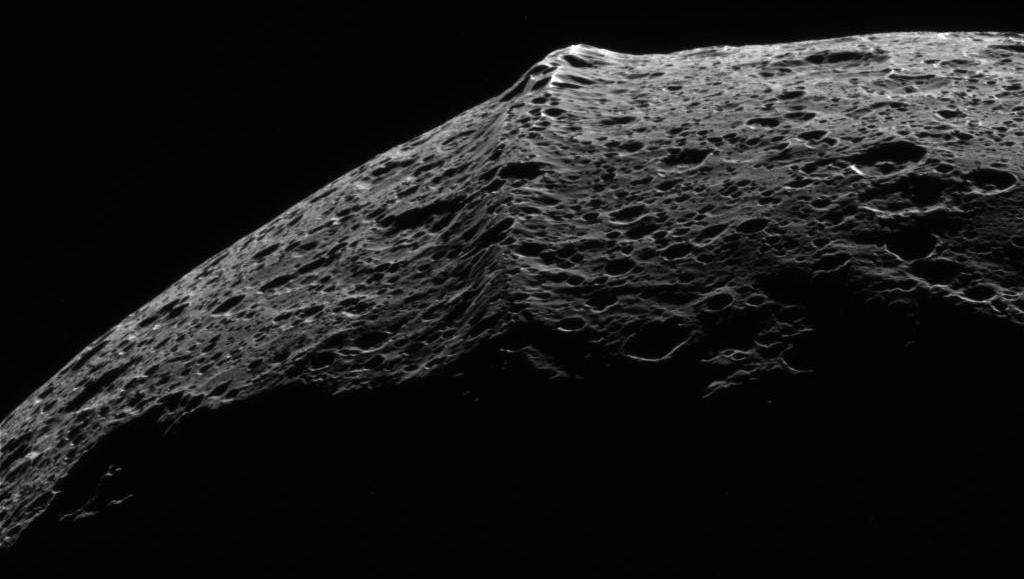
Photos of Equatorial Ridge of Iapetus.
Cassini close-up of Iapetus showing the equatorial ridge cutting across the limb (NASA/JPL/Space Science Institute (Cassini))

Quick facts
- Follows the equator almost exactly for ~1,300 km
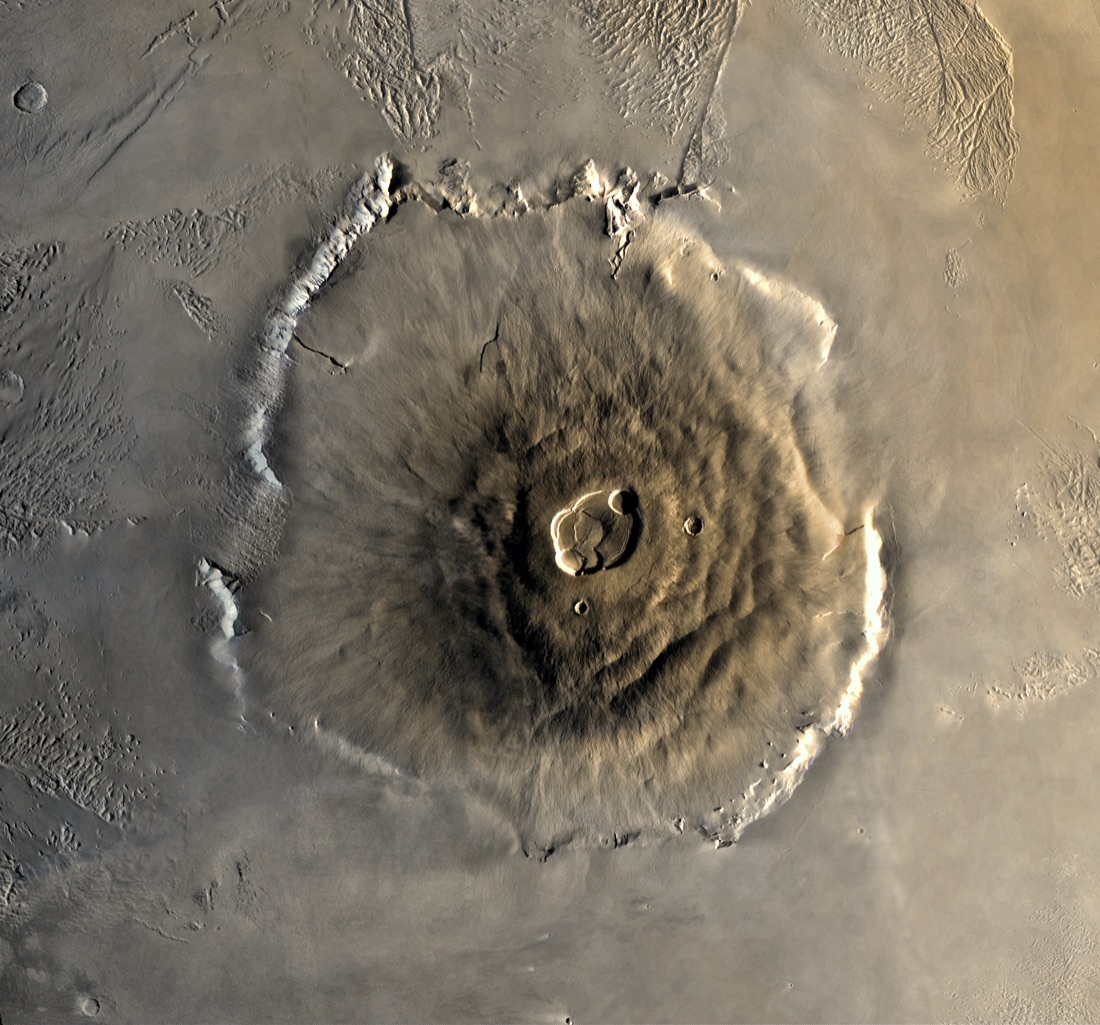
- Peaks reach ~20 km, rivaling Olympus Mons depending on how you measure
- Confined almost entirely to the dark hemisphere (Cassini Regio)
- Origin still unexplained: spin fossil, collapsed ring, or convection
- Makes Iapetus resemble a walnut