Colorado mountaineers have the
14ers — the 58 peaks that rise above 14,000 feet. Out here the bar is Mount Everest itself. A
29er is a mountain that rises at least
29,000 feet base-to-summit — the height of Everest (29,032 ft), Earth's tallest peak. Measured that way, every mountain in the solar system that out-tops Everest makes the list — from
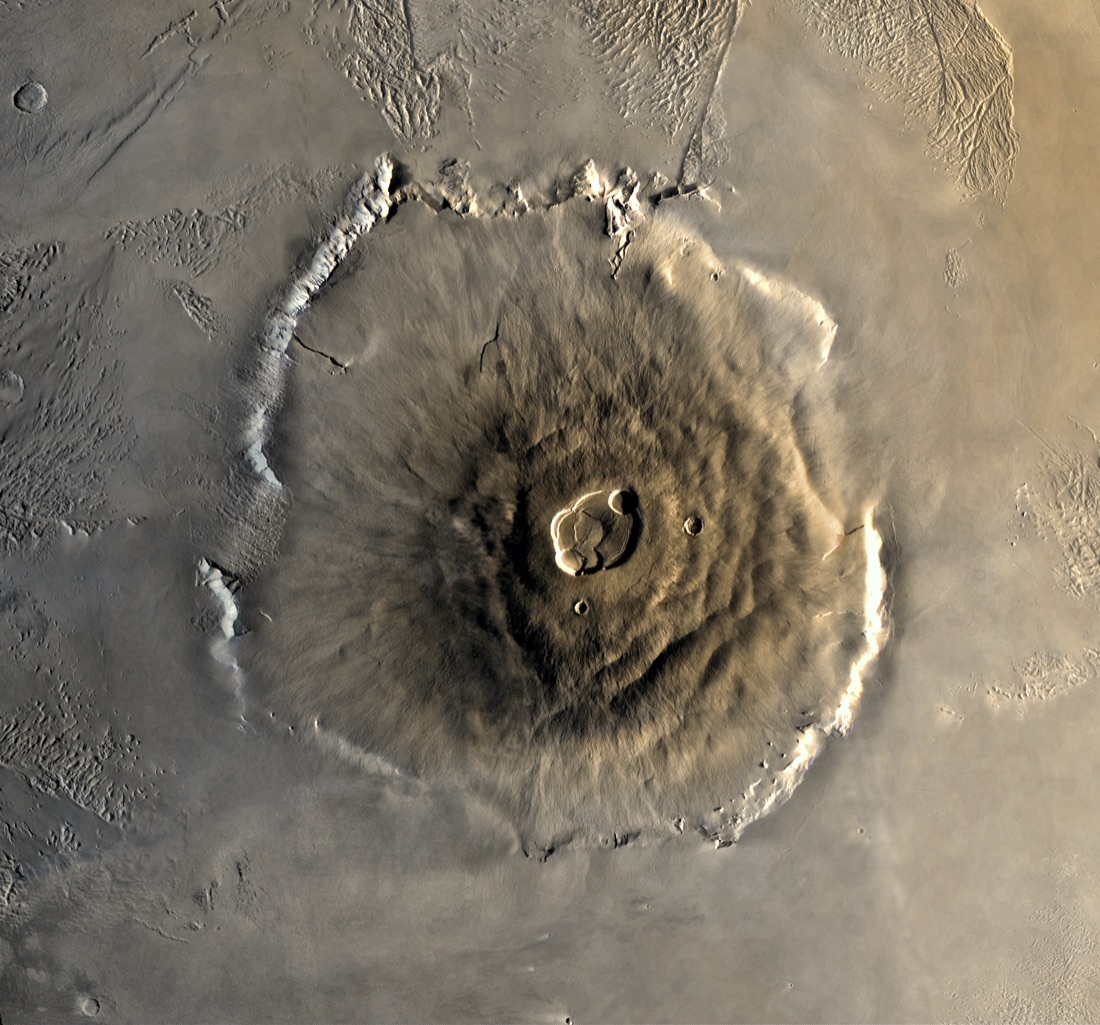
Olympus Mons and
Rheasilvia, tied for the title of tallest mountain anywhere at ~72,000 ft, all the way down to Everest, the shortest 29er of them all.
Every one is ranked base-to-summit, biggest first. See the
full ranked list of all thirteen.
How we measure
Earth's peaks are ranked by height above sea level, but most worlds have no sea. So solar-system mountains are compared
base to peak — the same way Hawaii's
Mauna Kea (~33,500 ft from the ocean floor) and
Mauna Loa (~30,085 ft) both out-top Everest. By that yardstick, Olympus Mons and Rheasilvia are the undisputed giants. Mount Everest is the lone exception we grandfather in: we list it by its famous 29,032 ft
above sea level, but measured base-to-peak like everything else it rises only ~12,000–15,000 ft — so Earth's most famous mountain makes the list with an asterisk, out-towered by two volcanoes most people have never heard of.
About this site
29ers.com is a parody of
14ers.com, built by
Spencer Boucher. Same look, bigger mountains. The peaks are real; the website is a joke. Imagery is courtesy of NASA/JPL and Wikimedia contributors, credited on each peak page.